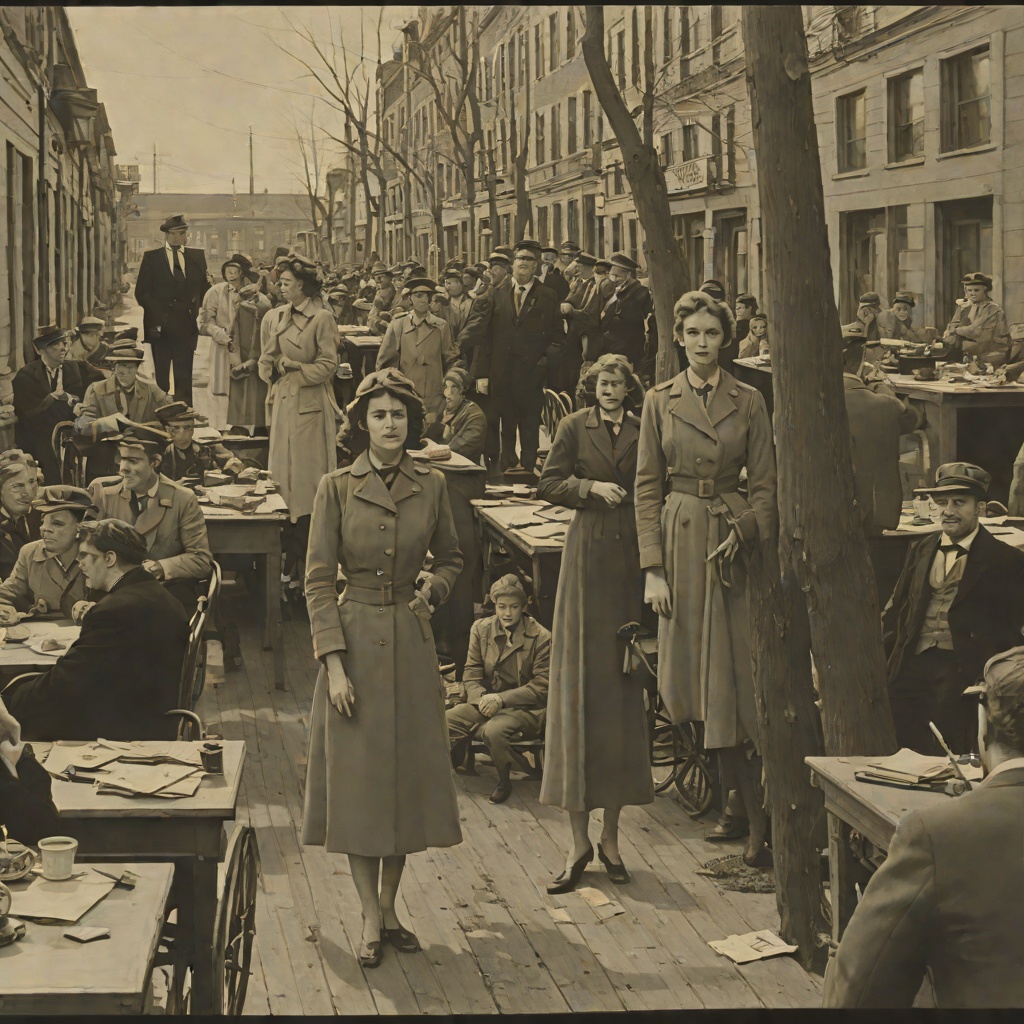
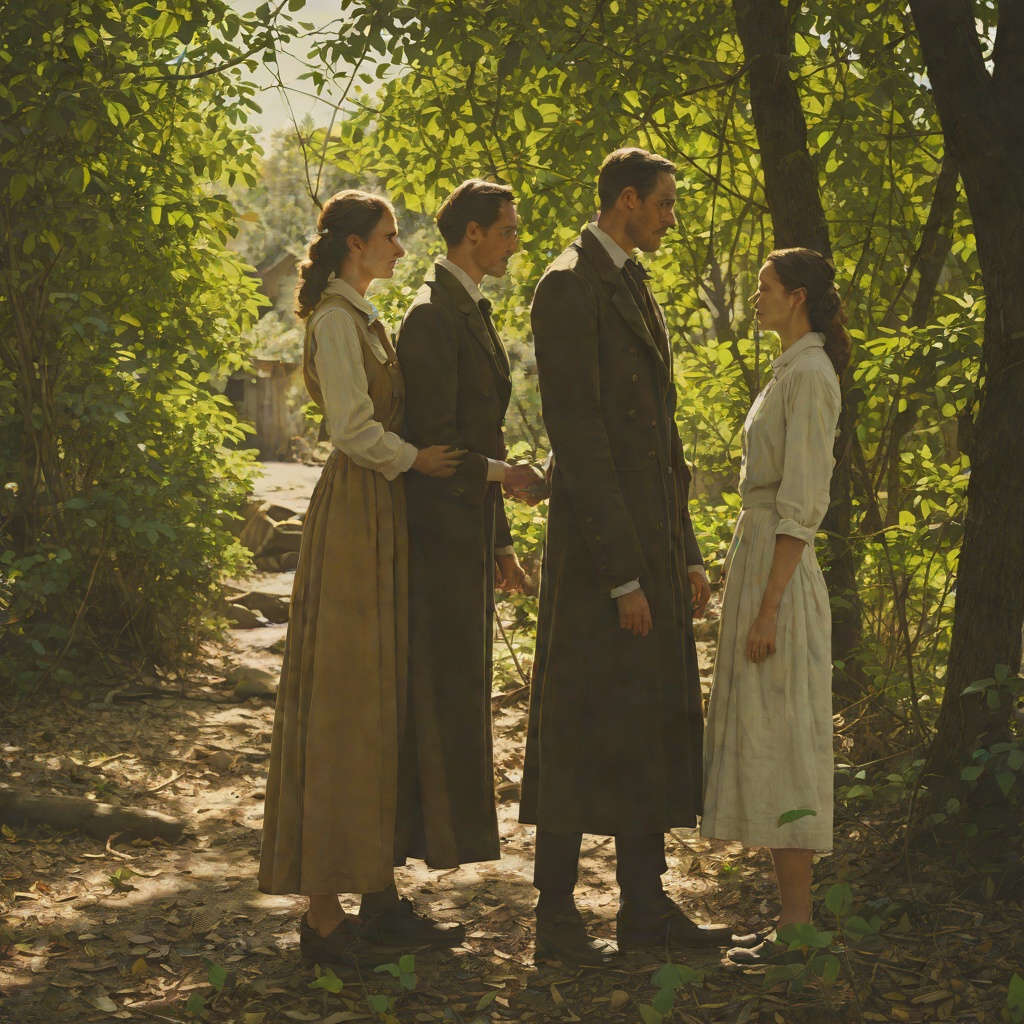
Mary Antin's graduation from grammar school
The Captain and Ann BarbaraMary Antin's graduation from grammar school, four years after her landing in Boston, is the climactic public performance of her Americanization—a day on which the immigrant girl who had entered the Chelsea public school as a self-conscious alien stood before a crowded assembly hall as the celebrated "smartest" girl in her class, only to have her triumph collapse into public humiliation when she rose unbidden to thank her eulogist. The event crystallizes the memoir's central drama: the conversion of Old World longing into New World achievement, and the precariousness of that achievement when performed before an audience.
The Road to Graduation
The graduation was the fulfillment of a promise that had begun long before Mary Antin ever set foot in an American classroom. In Russia, she had watched her cousin Hirshel start for school each morning, every thread of his student's uniform and every worn copybook in his satchel glorified in her envious eyes. That image of scholarship as a badge of honor had been planted in her imagination during the years of waiting, and it magnified the importance of her first day at the Chelsea public school a hundred times over. That bright September morning, she later wrote, she must always remember even if she lived to be so old that she could not tell her name, because of the years she had waited, the road she had come, and the conscious ambitions she entertained. Her father, Joseph Antin, had led his children to school on that first day with a heart full of longing and hope, taking long strides in his eagerness while the rest of the family ran and hopped to keep up. He had failed in his own primary quest for education and intellectual advancement in America—his struggle for a bare living left him no time for the public evening school, and he never learned to write correctly, his pronunciation remaining extremely foreign to this day. But he had found a means whereby he could draw one step nearer to the shining things of education, culture, and the higher life: he could send his children to school, to learn all those things that he knew by fame to be desirable. His children should be students, should fill his house with books and intellectual company, and thus he would walk by proxy in the Elysian Fields of liberal learning. The graduation was the visible proof that this proxy-walking had succeeded.
The Triumph of the Day
By the time of her graduation, Mary Antin had already established herself as the prodigy of her school district. She was known as the "smartest" girl in the class, and all eyes were turned on her, an awareness that she later admitted made her able to tell everything about the day. The assembly hall was crowded to bursting, but her friends had no trouble finding seats; they were ushered up to the platform, which was reserved for guests of honor. Her parents were there, and her sister Frieda, of course; Miss Dillingham, her first American friend who had given her the Longfellow volume and first put her name in print, was present, along with some others of her Chelsea teachers. A dozen or so of her humbler friends and acquaintances were scattered among the crowd on the floor. Mary Antin was very proud to see her friends treated with such distinction. She herself was arrayed like unto a princess, with frills, lace, patent-leather shoes, and even a sash with silk fringes—the full dress that Wheeler Street recognized as one of the five great events in a girl's life, alongside christening, confirmation, marriage, and burial. She had two pieces to speak, one of them an original composition, and she was aware of everything about the occasion.
The Stage Fright and the Composition
When she stepped up on the stage to read her composition, she was seized with stage fright. The floor under her feet and the air around her were oppressively present to her senses, while her own hand she could not have located. She did not know where her body began or ended, so conscious was she of her gloves, her shoes, her flowing sash. Her wonderful dress, in which she had taken so much satisfaction, gave her the most trouble; she was suddenly paralyzed by a conviction that it was too short, and it seemed to her that she stood on absurdly long legs. Ten thousand people seemed to be looking up at her. She supposed she no more than cleared her throat before she began to read, but to her it seemed that she stood petrified for an age, an awful silence booming in her ears. Her voice, when at last she began, sounded far away, and she thought that nobody could hear her. But she kept on, mechanically, for she had rehearsed many times. And as she read she gradually forgot herself, forgot the place and the occasion. The people looking up at her heard the story of a beautiful little boy, her cousin, whom she had loved very dearly, and who died in far-distant Russia some years after she came to America. Her composition was not a masterpiece; it was merely good for a girl of fifteen. But she had written that she still loved the little cousin, and she made a thousand strangers feel it. And before the applause there was a moment of stillness in the great hall.
The Thank-You Blunder
The triumph of the composition was undone in an instant by a single impulsive act. After the exercises, a eulogist spoke, and Mary Antin, prompted by the girls around her, rose where she sat and began, in a voice that sounded thin as a fly's after the oratorical bass of the last speaker: "I want to thank you—" That was as far as she got. Mr. Swan, the principal, waved his hand to silence her, and only then did she realize the enormity of what she had done. Her eulogist had had the good taste not to mention names, and she had been brazenly forward, deliberately calling attention to herself when there was no need. She hated herself; she hated with all her heart the girls who had prompted her to such immodest conduct. She wished the ground would yawn and snap her up. She was ashamed to look up at her friends on the platform, and she wondered what Miss Dillingham was thinking of her. She felt she had ruined her own triumph, disgraced herself, her friends, poor Mr. Swan, and the Winthrop School. The monster vanity, she concluded, had sucked out her wits and left her a staring idiot.
The Aftermath of Shame
After the exercises, when the crowd pressed in all directions in search of friends, she tried in vain to get out of the hall. She was mobbed, she was lionized; everybody wanted to shake hands with the prodigy of the day, and they knew who it was, for she had made sure of that by exhibiting herself. The people smiled on her, flattered her, passed her on from one to another. She smirked back, but she did not know what she said, wild to be clear of the building. She thought everybody mocked her. All her roses had turned to ashes, and all through her own brazen conduct. She would have given her diploma to have Miss Dillingham know how the thing had happened, but she could not bring herself to speak first. If she would ask her—but nobody asked. Nobody looked away from her. Everybody congratulated her, and her father and mother and her remotest relations. But the sting of shame smarted just the same; she could not be consoled. She had made a fool of herself, and Mr. Swan had publicly put her down. The day that should have been the apex of her civic pride and personal contentment—the day that, like her first day at school, she must always remember—had become a lesson in the cost of self-display.
The Significance of the Ceremony
The graduation stands as the culminating proof of what America had made possible for the immigrant child, and of the social economy that sustained her rise. The ceremony itself was a ritual of the community: Wheeler Street recognized graduation as one of the five great events in a girl's life, and no mother who had scrubbed floors for years to keep her girl in school was going to have her shamed in the end for want of a pretty dress, even if it meant cutting off the children's supply of butter, working nights, borrowing, and falling into arrears with the rent. The follies of the poor, Mary Antin observed, were worth studying—but she did not see her own graduation as folly, but as the fulfilment of the portent of her natal star. The day also revealed the network of support that had carried her forward: the teachers like Miss Dillingham and Miss Dwight who had nurtured her, the father who had walked by proxy in the Elysian Fields of liberal learning, and even the poor grocer Mr. Rosenblum who gave her oil for her lamp and helped keep her in school for years, running the risk of ruin without scolding, because he was himself an immigrant Jew of the type that values education and sets a great price on the higher development of the child. The graduation was the moment when all these investments—of butter, of oil, of hope, of proxy ambition—were cashed in before a crowded hall, and when the prodigy herself, in a single rash gesture, learned that the performance of American identity was also a performance of self-restraint.